Discover the top skills every student should learn before graduating to stay competitive in the job market. Learn which career skills are most important in 2026 and how to develop them.
Introduction
Graduating from college is an exciting milestone, but it also marks the beginning of a competitive professional journey. In today’s job market, companies expect more than just academic qualifications. They look for students who possess practical skills, strong communication, and the ability to adapt to new technologies.
Many graduates struggle to find jobs not because they lack degrees, but because they lack the skills required by modern workplaces. Employers prefer candidates who are capable of solving problems, working in teams, and learning quickly.
To succeed in 2026 and beyond, students must develop a combination of technical skills, soft skills, and digital skills before completing their education. These abilities help students stand out from other candidates and improve their chances of securing internships and full-time roles.
This guide highlights the most important skills every student should learn before graduating to build a successful career.
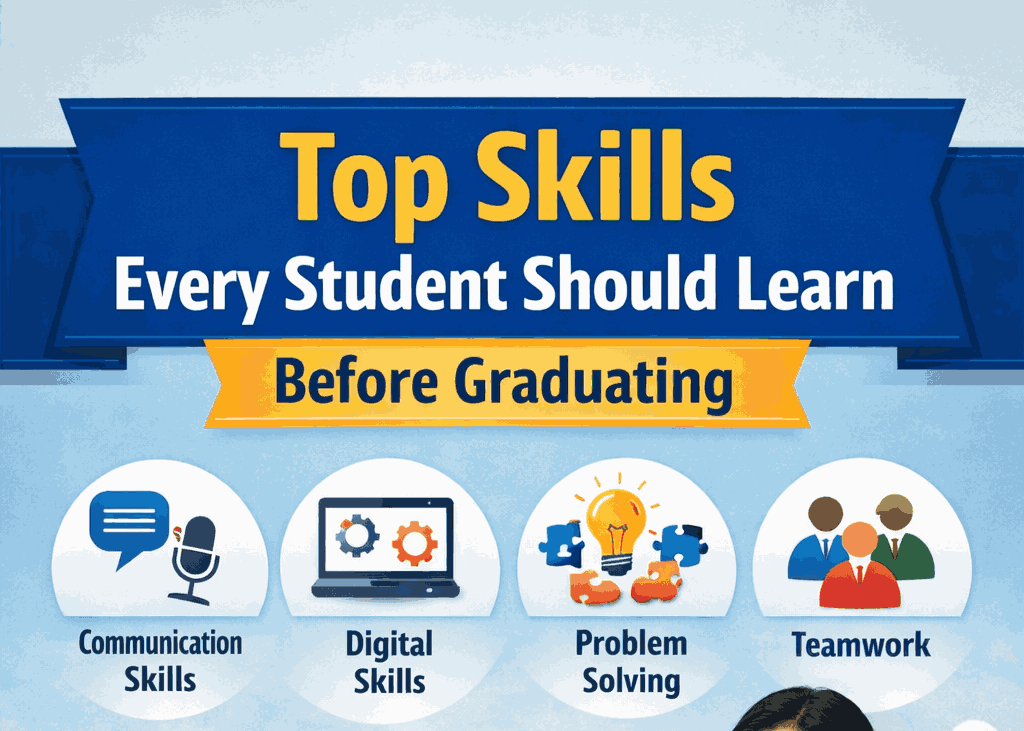
1. Communication Skills
Communication is one of the most valuable skills in any profession. No matter which industry you enter, the ability to express ideas clearly and confidently is essential.
Students should focus on improving both verbal and written communication. This includes presenting ideas in meetings, writing professional emails, explaining concepts to colleagues, and actively listening to others.
Strong communication skills also improve teamwork and leadership abilities. When students communicate effectively, they build better relationships with peers, mentors, and future employers.
2. Digital and Technical Skills
Technology plays a major role in almost every industry today. Students who understand digital tools and software have a clear advantage in the job market.
Basic digital skills include using productivity tools such as spreadsheets, presentations, and collaborative platforms. However, students can go further by learning specialized technical skills such as data analysis, web development, graphic design, or digital marketing.
Even if your career is not purely technical, having digital knowledge helps you adapt to modern workplaces and improves your efficiency.
3. Problem-Solving Skills
Companies value employees who can identify problems and find effective solutions. Problem-solving requires critical thinking, creativity, and logical analysis.
Students can develop this skill by working on projects, case studies, and real-world challenges. Instead of memorizing information, they should focus on understanding how to apply knowledge in practical situations.
Problem-solving skills also help students remain calm and confident when facing difficult situations in professional environments.
4. Time Management
Managing time effectively is an essential skill for both students and professionals. During college, students often juggle assignments, exams, internships, and extracurricular activities.
Learning how to prioritize tasks, set deadlines, and organize schedules can significantly improve productivity. Effective time management helps students avoid stress and ensures that they meet commitments on time.
Professionals who manage time well are more reliable and capable of handling multiple responsibilities.
5. Teamwork and Collaboration
Most workplaces require employees to work in teams. Successful collaboration depends on respect, communication, and the ability to contribute ideas while listening to others.
Students should participate in group projects, team activities, and collaborative assignments to build teamwork skills. These experiences help them understand how to share responsibilities, resolve conflicts, and achieve common goals.
Teamwork skills are highly valued by employers because they create positive and productive work environments.
6. Adaptability and Learning Mindset
The world is constantly changing due to technological advancements and evolving industries. Students who develop an adaptable mindset are better prepared to handle these changes.
Adaptability means being open to learning new tools, exploring new ideas, and adjusting to unexpected situations. Instead of fearing change, adaptable individuals see it as an opportunity to grow.
Developing a continuous learning mindset ensures long-term career success.
7. Creativity and Innovation
Creativity is no longer limited to artistic professions. Modern companies value employees who can generate new ideas and think outside the box.
Creative thinking allows students to approach challenges from different perspectives and develop innovative solutions. Whether designing products, improving business strategies, or creating marketing campaigns, creativity adds value to any organization.
Students can nurture creativity by exploring new hobbies, experimenting with projects, and collaborating with diverse teams.
8. Networking and Professional Relationships
Networking is an essential career skill that many students overlook. Building professional relationships helps students learn from experienced individuals and discover career opportunities.
Students can network by attending seminars, connecting with mentors, participating in internships, and engaging with professionals in their field of interest.
Strong networks often lead to job referrals, career guidance, and valuable insights into industry trends.
Why Skill Development Is Important for Students
Learning these skills before graduating significantly improves a student’s career prospects. Employers seek individuals who can contribute immediately and adapt to workplace demands.
Skill development also increases confidence, allowing students to perform better in interviews and professional environments.
Platforms like SkillMap help students discover courses that build practical skills, compare training institutes, and choose programs that align with their career goals.
By exploring skill-based courses and practical learning opportunities, students can gain the knowledge and experience needed to succeed in competitive industries.
Conclusion
Graduating with a degree is an important achievement, but it is only the beginning of a successful career journey. To stand out in the modern job market, students must focus on developing essential skills such as communication, digital literacy, problem-solving, teamwork, and adaptability.
These abilities not only increase employability but also prepare students for long-term professional growth. By continuously improving their skills and gaining practical experience, students can confidently transition from education to the workplace.
Want to build job-ready skills before graduation?
Explore skill development courses and compare training institutes on www.myskillmaps.com to start preparing for your future today.